35 Wild Animal Silhouette Clipart: A Practical Resource for Designers, Educators, and Content Creators
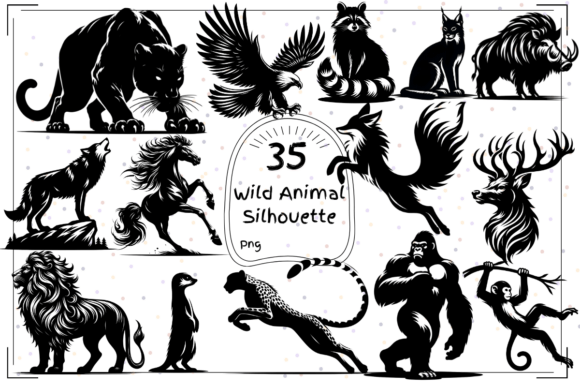
When you need to communicate an idea quickly, few visual tools cut through noise like a clean silhouette. The 35 Wild Animal Silhouette Clipart set offers a curated collection of wildlife shapes that work across media, platforms, and skill levels. Unlike highly detailed illustrations that demand specific contexts, silhouettes remain flexible. They can anchor a logo, support an infographic, or frame a presentation slide without competing for attention. This article walks through how to integrate this clipart set into your actual workflows—whether you run a small business, create educational content, or manage social media assets.
What Makes 35 Wild Animal Silhouette Clipart a Versatile Asset
A silhouette removes detail by design. What remains is the essential outline—the profile of an elephant, the antlers of a deer, the wingspan of an eagle. This reduction makes the image readable at small sizes, reproducible in one color, and easy to layer with other elements. The 35 Wild Animal Silhouette Clipart set covers a broad range of species, from African savanna animals to forest dwellers and birds of prey. That diversity means you can use the same set for a nature-themed website, a classroom worksheet, or a product label for an outdoor brand.
Because the files are clipart, they typically ship as transparent PNGs, SVGs, or vector formats. This directly affects how you prepare and use them. If you work in Adobe Illustrator or Affinity Designer, vector files let you scale any animal to billboard size without losing sharpness. If you prefer Canva or PowerPoint, PNG versions with transparent backgrounds drop directly onto your canvas. The set becomes a plug-and-play resource once you understand which format fits your current project.
Before a Project: Planning and Concept Development
During the planning phase, you are often sketching concepts or building mood boards. The 35 Wild Animal Silhouette Clipart set can serve as a visual shorthand. Instead of describing an animal in words, drop a silhouette onto a draft layout to see how the composition holds. For example, if you are designing a series of hiking trail markers, place the bear and wolf silhouettes at different scales early in the process. This helps you decide whether the shapes work as standalone icons or need text integration.
Also consider using the clipart to communicate with clients or stakeholders. A quick mockup with silhouettes is more concrete than a wireframe with gray boxes. You can swap silhouettes in and out to test visual balance without commissioning custom art. This saves time and keeps the planning phase focused on structure rather than decoration.
During a Project: Design and Execution
Once you move into production, the clipart set becomes a primary building block. In a typical workflow, you import an SVG or PNG file, place it on your canvas, and adjust size, rotation, and color. Because silhouettes have no internal detail, you can apply effects like gradients, shadows, or halftone patterns without worrying about clashing with the original image. This is especially useful for T-shirt designs, poster backgrounds, or monochrome branding where simplicity is key.
In an educational context, you might use the clipart to create matching games, flash cards, or habitat maps. The 35 Wild Animal Silhouette Clipart set gives you enough variety to cover multiple lesson plans without sourcing new images each time. Teachers often report that silhouettes reduce visual distraction for students, allowing them to focus on the concept—such as animal classification or geography—rather than the artistic style of the illustration.
For social media managers, the set enables quick generation of themed posts. A silhouette of a lion combined with a motivational quote works for Monday morning content. A bird silhouette over a sunrise gradient fits a nature-themed feed. Because you can reuse the same shapes with different colors and backgrounds, you maintain visual consistency across posts without hiring a designer for every piece of content.
After a Project: Refinement and Repurposing
After a project ships, the clipart does not become obsolete. The same elephant silhouette that appeared in a brochure can be resized and recolored for a website banner or an email header. Many professionals keep a folder of the 35 Wild Animal Silhouette Clipart set as part of their asset library. When a client requests a quick revision—such as swapping a bear for a moose on a product label—you can make the change in minutes instead of searching for a new image or negotiating rights.
Repurposing also applies to formats. A silhouette that works as a static PNG in a document can be converted to a one-color vector for screen printing or engraving. If you own the SVGs from the set, you can even import them into cutting machine software for vinyl decals or stencils. This long reuse cycle makes the initial download more valuable than a single-use stock photo.
Integration with Tools, Platforms, and Other Resources
The 35 Wild Animal Silhouette Clipart set interacts smoothly with a wide range of design tools. Here are common integration points that affect your daily workflow:
- Vector editors (Illustrator, Inkscape, Affinity Designer): SVGs from the set retain their anchor points and paths, so you can edit individual curves, merge shapes, or create compound paths. Use the pen tool to refine any contour if you need a custom species variation.
- Presentation software (PowerPoint, Google Slides, Keynote): Import PNG files with transparent backgrounds directly onto slides. Because silhouettes have no background, they layer over text boxes and gradient fills without masking efforts.
- Online design platforms (Canva, Crello, Visme): Upload the clipart as an element and reuse it across multiple designs. Most platforms remember your uploads in a library, so the set becomes a permanent resource.
- Print-on-demand and merchandise (Society6, Redbubble, Printful): Vector formats allow you to scale the same silhouette for a phone case, a throw pillow, or a wall art print while keeping sharpness consistent.
- Digital planners and note-taking apps (GoodNotes, Notability, OneNote): Insert PNG silhouettes as stickers or illustrations in digital journals. This is particularly useful for nature-themed planners or habit trackers with wildlife icons.
The key interaction here is file format compatibility. Before you buy or download a clipart set, confirm that it includes SVG or AI files for vector work and high-resolution PNGs for raster applications. The 35 Wild Animal Silhouette Clipart set typically covers both, but checking upfront saves you from converting formats later.
Organizing Your Clipart Library
If you only use clipart once, organization matters little. But if you plan to integrate the set into long-term projects, a structured folder system saves hours. Create a top-level folder named 35 Wild Animal Silhouette Clipart. Inside, sort by animal type—for example, subfolders for African mammals, birds, North American wildlife, and reptiles. Alternatively, sort by format: SVGs in one folder, PNGs in another. Add a simple text or spreadsheet file that lists each animal and its filename. When you need a specific silhouette six months from now, you can locate it without previewing every file.
Maintaining Visual Consistency
Because silhouettes are monochrome by default, you have full control over color. Set a palette early in the project and apply it across all uses. If your brand uses forest green and warm gray, convert every silhouette to those two colors. For multi-animal scenes, consider using opacity or scale to create depth instead of introducing extra colors. This keeps the final design coherent and professional.
Also note that silhouettes from the same set share a common style—they were likely drawn with similar line weight and level of detail. This internal consistency is an advantage over mixing clipart from different sources, which often creates a mismatched look. Whenever possible, use the 35 Wild Animal Silhouette Clipart set as the sole illustration source for a given project to maintain visual unity.
Scaling and Customization
One of the first adjustments you will make is scaling. A fox silhouette sized for a business card will need different dimensions than one used on a billboard. If you work with vectors, scaling is risk-free. With raster PNGs, keep the original file high-resolution (at least 300 dpi) and only scale down. Scaling up a low-resolution PNG introduces pixelation.
Customization goes beyond size. You can rotate silhouettes to create dynamic compositions, mirror them for symmetry, or combine multiple animals into a single scene. For example, overlapping a bear silhouette with a tree silhouette from another set can create a layered forest image. Since silhouettes have no interior detail, they tolerate these edits well.
Long-Term Use and Quality Control
Over time, an asset library accumulates files. Quality control ensures that the 35 Wild Animal Silhouette Clipart set remains usable. Check that each file has a clear, identifiable outline. Poorly traced clipart can have jagged edges or missing segments, which become visible when printed large. If you encounter a file with rough paths, use the vector editor’s smoothing tool or manual path adjustment to clean it up before storing it in your library.
Also consider versioning. If you edit or recolor a silhouette, save it as a new file rather than overwriting the original. This way, you can always return to the baseline version for future projects that require the default appearance. A naming convention like fox_original.svg and fox_green.svg keeps things clear.
For teams, share the organized folder through a cloud service such as Google Drive or Dropbox. Set permissions so that everyone pulls from the same source. This prevents colleagues from using outdated or modified versions that could break consistency across a campaign or publication.
Observations on Usability and Compatibility
From a usability standpoint, the 35 Wild Animal Silhouette Clipart set lowers the barrier to entry for non-designers. A blogger who has never opened vector software can still drag a PNG into a blog post header. An educator with basic PowerPoint skills can create worksheets in minutes. This accessibility does not compromise the quality of the final output when the files are properly prepared.
Compatibility issues arise mostly from file format ignorance. If you download a set that only offers EPS files but you use Canva, you will need to convert or find an alternative. Always match the format to your primary design environment. For most users, SVG plus high-res PNG is the safest combination. The SVGs handle all scalability needs, and the PNGs cover quick drag-and-drop tasks.
Another observation is that silhouettes work exceptionally well in combination with other elements. They sit naturally over patterns, textures, and photographs. You can place a zebra silhouette over a gradient sunset for a travel poster or overlay multiple bird silhouettes on a solid background to create a minimalist mural. The lack of interior detail makes them receptive to blending modes and opacity adjustments that would look messy on detailed photos.
Finally, consider the emotional tone. Wildlife silhouettes convey strength, freedom, and connection to nature. This makes them appropriate for brands and projects that want to evoke those values without showing a specific animal in a specific pose. The 35 Wild Animal Silhouette Clipart set gives you a palette of icons that carry symbolic weight while remaining neutral enough to adapt to different contexts.
Whether you are planning a product launch, designing a classroom activity, or building a consistent social media presence, this clipart set fits into the work you already do. It asks little in terms of learning curve and returns a reusable library of clean, scalable shapes. By organizing your files, choosing the right format for each task, and thinking ahead about repurposing, you get the most out of the collection without disrupting your existing processes.