Understanding Bird Winged Creature Head Silhouettes: A Guide to Their Role in Art and Identification
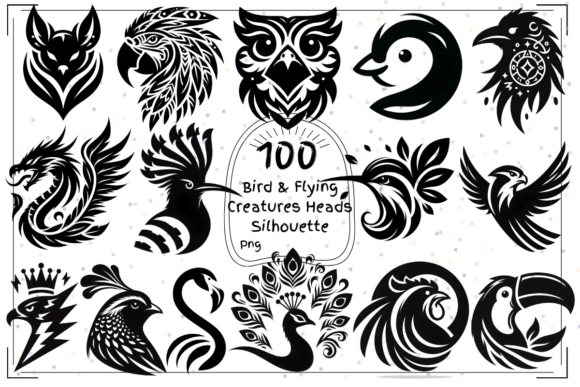
When we think of winged creatures, from eagles to dragons, the immediate image that often comes to mind is the full-bodied form in flight. Yet there is a distinct and powerful approach that focuses on a single, defining portion: the head silhouette. Bird winged creature head silhouettes strip away the wings, body, and tail, zeroing in on the profile of the head, beak, crest, and sometimes features like horns or ear tufts. This focused representation offers a unique combination of clarity, symbolism, and practicality that sets it apart from other silhouette styles.
Whether you work in graphic design, wildlife branding, or fantasy illustration, understanding what makes bird winged creature head silhouettes distinct can help you choose the right visual shorthand for your project. This article explores how they compare with alternative silhouette formats, their strengths and tradeoffs, and the real-world situations where they shine or fall short.
How Bird Winged Creature Head Silhouettes Differ from Full-Body Silhouettes
The most immediate difference is scope. A full-body silhouette of a bird or winged mythical creature conveys the entire outline, including wing spread, tail shape, and overall posture. In contrast, a bird winged creature head silhouette focuses exclusively on the head and upper neck. This distinction matters because each approach communicates different information.
For birdwatchers and wildlife educators, a full-body silhouette can help identify species by flight pattern or perching stance. A head silhouette, however, draws attention to the beak shape, head angle, and crest details—traits that are often more diagnostic for differentiating between similar species. For example, the downward curve of a curlew’s beak is instantly recognizable in a head-only silhouette, while its full-body silhouette might look similar to other wading birds from a distance.
In graphic design and branding, the choice often comes down to scale and impact. A full-body silhouette of an eagle with wings spread can be dramatic but may lose detail when reduced to a small logo or icon. A bird winged creature head silhouette remains legible at smaller sizes and can be used in tighter spaces, such as app icons, favicons, or business cards. The tradeoff is that you sacrifice the narrative of flight or motion that a full wing silhouette provides.
Comparing Head Silhouettes Across Bird Species and Mythical Creatures
The term “bird winged creature” deliberately encompasses both real birds and mythological beings like griffins, phoenixes, or winged dragons. While real bird head silhouettes are grounded in anatomical accuracy, mythical variants introduce creative elements such as horns, plumed crests, or elongated snouts. Comparing these two categories reveals important distinctions in recognition and audience expectation.
For a realistic bird head silhouette—say, a bald eagle or a great horned owl—the silhouette needs to capture subtle proportions. The curve of the brow, the shape of the beak, and the position of the eye (even if not drawn) all contribute to instant recognition by someone familiar with the species. This makes realistic head silhouettes popular in conservation logos, park signage, and ornithological materials.
Mythical creature head silhouettes, by contrast, rely on cultural archetypes. A dragon head silhouette often includes features like a pronounced brow ridge, backward-swept horns, and a jagged jawline. A griffin head combines the beak of an eagle with the ears of a lion. These silhouettes succeed when they evoke a known mythology without becoming too cluttered. The tradeoff is that highly detailed mythical head silhouettes can become illegible at small sizes, whereas simpler, more iconic shapes maintain clarity.
Practical Applications and Best-Fit Situations
Bird winged creature head silhouettes are not a one-size-fits-all solution, but they excel in specific contexts. Here are several common use cases and the reasoning behind them:
- Branding and Logo Design: When a company wants to associate itself with the traits of a specific bird—such as a raven for intelligence or a hawk for vision—a head silhouette can serve as a sleek, memorable mark. It works well when the brand name includes the creature or when a full-body silhouette would feel too busy.
- Field Guides and Identification Cards: Bird enthusiasts often appreciate head silhouettes for quick reference. Beak shape and head color patterns are primary identification clues. A head-only silhouette on a quick-reference card helps experienced watchers confirm species without scanning the entire bird.
- Emblems and Badges: Military units, sports teams, and fantasy groups often choose head silhouettes for patches and insignias. They provide a bold focal point and can incorporate additional elements like stars, swords, or shields without visual clutter.
- Tattoo Art and Decorative Motifs: A bird winged creature head silhouette can fit naturally into a design along a collarbone, forearm, or behind the ear. It complements other imagery and allows for fine detail in a compact area.
In each of these scenarios, the head silhouette outperforms the full-body alternative when space is limited, when the head features are the most distinctive part, or when the design must remain recognizable at multiple scales.
Key Factors in Choosing Between Head Silhouettes and Alternatives
Deciding whether a bird winged creature head silhouette is the right choice involves weighing several factors:
Detail and Precision
If the subject’s head contains highly distinctive details—like the elongated neck of a shoebill or the elaborate crest of a cockatoo—a head silhouette can capture those details with greater fidelity than a smaller full-body silhouette. However, if the head shape is very simple (e.g., a pigeon or a generic mythical bird with no horns), a head silhouette may lack visual interest. In such cases, a full-body silhouette showing wing span or plumage silhouette might be more engaging.
Scalability and Legibility
Head silhouettes generally scale down better than full-body versions. The outline of a wing, when shrunk to 20 pixels, can become an unrecognizable blob, whereas a well-designed head silhouette retains its core shape. This is crucial for digital icons, social media avatars, and small print applications.
Audience Association
Consider what your audience associates with the silhouette. For example, a bald eagle head silhouette strongly conveys American patriotism. A phoenix head silhouette suggests themes of rebirth and fire. A general bird head silhouette might be more neutral and suitable for nature brands. If the intended meaning relies heavily on the creature’s full body posture (e.g., a bird in flight symbolizing freedom), a head silhouette may not deliver that message as clearly.
Cultural Context
Mythical winged creature head silhouettes can carry different connotations across cultures. A dragon head silhouette that appears fierce in Western iconography might need to align with the long, serpentine forms common in East Asian art to be correctly interpreted. When creating a bird winged creature head silhouette, ensure that the stylistic choices match the cultural narrative you intend to convey.
Realistic Examples: Bird Winged Creature Head Silhouettes in Action
Consider a nature center that wants a logo for its raptor sanctuary. A full-body silhouette of a red-tailed hawk in flight is fine, but many other raptors have similar flight silhouettes. Instead, a bird winged creature head silhouette of a red-tailed hawk—emphasizing its short, hooked beak and broad head—immediately distinguishes it from a falcon or kestrel. The logo becomes educational by default.
On the fantasy side, a game developer designing a faction symbol for a dragon-riding race may choose a dragon head silhouette that includes sweeping horns and a narrow snout. This silhouette appears on maps, flags, and character armor. The same design would lose impact if it included the full serpentine body, which would require too much space and complexity.
Both examples highlight how the head silhouette becomes a shorthand that prioritizes recognition and symbolic weight over narrative completeness.
Limitations and When to Consider Other Options
Despite their advantages, bird winged creature head silhouettes are not always the best fit. If your goal involves showing movement, group dynamics, or habitat context, a full-body silhouette is necessary. For instance, a flock of birds in flight benefits from the negative space between wings and bodies, which head-only silhouettes cannot provide.
Additionally, if the winged creature’s head is not the most visually striking part, relying on a head silhouette might feel underwhelming. Peacocks, for example, are famous for their tail plumage; a head silhouette alone does not convey the splendor. Similarly, for mythological creatures like harpies or sphinxes, the upper body or wings might carry more meaning than the head profile.
Another limitation is that head silhouettes can be ambiguous without context. A generic bird head silhouette could be mistaken for any one of dozens of species if beak and head shape are not sufficiently defined. In identification materials, it may need to be accompanied by text or color cues.
Making an Informed Choice
To decide whether a bird winged creature head silhouette aligns with your needs, start by evaluating the primary message, the medium of use, and the desired level of detail. Ask yourself:
- Will the silhouette be used at small sizes? If yes, head silhouettes are often superior.
- Does the creature’s head contain unique features that aid recognition? If so, lean into those.
- Is the full body important for context or emotional impact? If yes, consider a full-body approach or add subtle body cues alongside the head.
- Does the design need to fit into a compact space (e.g., a circular badge, a square icon)? Head silhouettes adapt more easily.
Bird winged creature head silhouettes offer a compelling blend of focus, scalability, and symbolic power. They are not always the right answer, but when used deliberately, they provide a clean, distinctive representation that resonates with audiences familiar with the creature. By understanding the tradeoffs between this style and full-body or other silhouette alternatives, you can make a confident choice that serves your specific project.