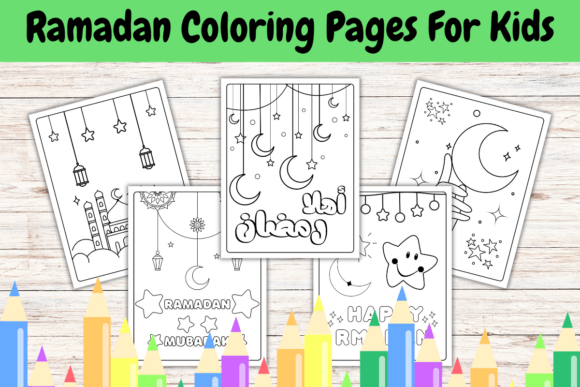
Ramadan Coloring Pages for Kids: A Creative Resource for Families and Educators
Ramadan is a month of reflection, community, and spiritual growth, but for families with young children, it also brings the challenge of keeping little ones engaged during long days of fasting and evening prayers. Ramadan Coloring Pages for Kids offer a quiet, creative outlet that helps children connect with the traditions of the month in a hands-on way. These are printable or digital coloring sheets featuring symbols like lanterns (fanoos), crescent moons, stars, dates, mosques, and scenes of family iftar meals or acts of charity. While they look simple, these pages serve as a bridge between a child's everyday world and the deeper meaning of Ramadan.
The beauty of these coloring pages lies in their versatility. They aren't just about filling in lines with color—they become conversation starters, teaching tools, and even business assets for those who create and distribute them. Whether you're a parent looking for a quiet activity after taraweeh prayers, a teacher planning a lesson on Islamic culture, or a small business owner building a Ramadan-themed product line, these pages can fit naturally into your routine.
Keeping Little Hands Busy During Ramadan
For many Muslim families, the daily rhythm of Ramadan shifts significantly. Children wake early for suhoor, then have long daylight hours to fill. Coloring pages offer a screen-free activity that can be done at the kitchen table while parents prepare iftar or rest. A set of Ramadan Coloring Pages for Kids placed on a table with crayons or washable markers can buy you twenty minutes of calm—enough to read a few pages of Quran or set out dates and water without interruption.
Consider the scenario of a family hosting iftar guests. The adults are busy in the kitchen, and younger children may feel left out. Handing them a themed coloring sheet of a mosque or a family breaking fast together gives them something to do in the living room, and it also keeps the Ramadan spirit present. Later, those colored pages can be taped to the refrigerator or used to decorate the house for Eid. It's a low-cost, meaningful touch.
For kids who struggle with the concept of fasting, coloring pages that illustrate the sequence of suhoor, fasting, and iftar can help normalize the routine. Parents can talk through each image as the child colors, reinforcing the schedule without pressure.
Supporting Islamic Education at Home and in the Classroom
Homeschooling parents and Islamic school teachers often face the challenge of introducing Ramadan topics in an age-appropriate way. Ramadan Coloring Pages for Kids become a ready-made resource for lesson planning. Instead of spending hours designing worksheets, an educator can download a curated set that covers five pillars, acts of kindness, or the story of the Quran being revealed.
In a classroom setting, coloring pages work well as a bell-ringer activity. Students arriving in the morning can settle down by coloring a page related to the day's lesson. This sets a calm tone and gives latecomers time to join without disruption. For teachers, having a binder of these pages organized by topic means you can pull one out at any moment—for a substitute teacher, for kids who finish work early, or as part of a Ramadan bulletin board display.
One practical approach is to use the coloring pages to teach the Arabic words for common Ramadan items. For example, a page showing a lantern can have the word "fanoos" printed in Arabic and transliterated. Children color the picture while repeating the word, combining tactile learning with language acquisition. This works well in both weekend Islamic schools and full-time private schools.
A Tool for Cultural Exchange and Community Activities
Ramadan coloring pages aren't only for Muslim families. Interfaith programs, cultural centers, and public libraries often look for inclusive activities during the month. A simple coloring table set up with crescent moons and mosques invites children of all backgrounds to participate. It’s a gentle way to introduce the aesthetics of Ramadan without overwhelming detail.
Imagine a community iftar hosted at a local church or community center. The organizers prepare a kids' corner with Ramadan Coloring Pages for Kids, along with some crayons and Ramadan-themed stickers. While adults listen to a talk about fasting, the children are engaged in a quiet, creative activity that happens to teach them symbols like the star and crescent or a dish of dates. The pages don't require explanation—they let the imagery speak for itself.
Similarly, Muslim Student Associations (MSAs) on college campuses sometimes host events where faculty and staff bring their children. Having coloring pages available makes the event more welcoming for younger guests. It signals that the community thinks about children's involvement, not just adult programming.
Practical Ways to Combine Coloring with Learning
The best Ramadan Coloring Pages for Kids do more than keep children occupied—they embed small lessons. For example, a page featuring a mosque might include simple labels like "minaret" and "dome." Another page might show a family giving money to someone in need, prompting a discussion about zakat and charity. For slightly older children, pages with mazes or connect-the-dots add a layer of problem-solving on top of coloring.
You can use these pages as part of a Ramadan activity calendar. Each day of the month, a child gets a new coloring sheet that corresponds to that day's theme—like kindness, patience, or gratitude. At the end of the month, the collection of finished sheets becomes a portfolio of their Ramadan journey. Parents can staple them into a booklet or take photos to share with grandparents living far away.
For entrepreneurs creating digital products, this is a strong selling point. You can market your coloring bundle as a "30-day Ramadan journal for kids." Each page doesn't just ask the child to color—it includes a simple prompt like "Draw or color something you are thankful for today." This turns a passive activity into an interactive one, increasing perceived value.
Digital Distribution: Sharing Resources with a Wider Audience
For bloggers, social media influencers, and small business owners, Ramadan Coloring Pages for Kids represent a low-investment, high-engagement product. Digital downloads have no inventory cost. A PDF bundle of 20 pages can be sold on platforms like Etsy, Teachers Pay Teachers, or Gumroad for a few dollars. During the weeks leading up to Ramadan, demand spikes, and many parents are actively searching for ready-to-print resources.
Creators can also offer a handful of free pages as lead magnets to grow an email list. A blog post titled "Free Ramadan Coloring Pages for Kids" with five printable sheets can attract organic traffic from parents and educators. In the same post, you can link to a larger paid bundle with additional pages, activity ideas, and even lesson guides. The key is to make the free pages genuinely useful so that readers see the value of the full set.
One creator I know shares a single high-quality coloring page each Ramadan on her Instagram, with a clear call to action in her bio for the full set. She reports that these posts consistently outperform her other content in saves and shares. Coloring pages are visual by nature—they lend themselves well to social media. A short video showing a child coloring with the final page revealed can work beautifully for Reels or TikTok.
If you're a publisher or a freelance designer, consider creating a series of coloring pages that align with specific Ramadan values—one page about family, one about prayer, one about generosity. This allows you to market the set not just as coloring but as a values-based educational resource, which opens up sales to schools and religious education coordinators.
What to Look for When Choosing or Creating Ramadan Coloring Pages
Not all coloring pages are created equal, and your audience will appreciate thoughtful design. Here are a few considerations based on real feedback from users:
- Age appropriateness: A page with fine details frustrates a four-year-old, while a page that is too simple bores an eight-year-old. If you are creating or selecting pages, offer differentiated versions—maybe one with thick lines and large shapes for toddlers, and another with intricate patterns for older kids who enjoy detailed work.
- Cultural representation: Ramadan is observed around the world, and imagery can vary. Some families prefer scenes of outdoor Iftar in a Middle Eastern setting; others might want a more generic or local representation. A diverse set is usually welcomed. Avoid excluding any cultural nuance unnecessarily.
- Educational value: The best pages weave in something to learn—maybe a dua (prayer) in Arabic and English, or a fact about the moon sighting. Parents and teachers appreciate pages that serve double duty.
- Print quality: If you are distributing digital files, test that the lines print cleanly in black and white. Heavy ink usage could disappoint users who want to save on printer ink. Offer a "printer-friendly" version if possible.
- Licensing: If you are a creator, be clear about personal use versus commercial use. Many teachers want to print for their entire class, and a license that allows that is a selling point. On the buyer side, reading the terms ensures you aren't violating copyright.
Another practical tip for users: download a few different free sets before committing to a paid bundle. This gives you a sense of the quality and style that matches your needs. For educators, testing one page with a class can reveal whether the detail level and themes resonate with your students.
Making Your Own: A Word of Caution
If you are an entrepreneur or a hobbyist designer and plan to create your own Ramadan Coloring Pages for Kids, invest time in the concept phase. Rushing out generic crescent-and-star pages will not differentiate you. Think about the specific problems your audience faces. A busy mother might want pages that are one-sided (so markers don't bleed through) and with a perforated edge for easy removal. A teacher might want pages that align with curriculum standards. By solving these small friction points, you turn a simple coloring page into a solution.
Ramadan passes quickly, and the windows for selling or using these seasonal resources are narrow. Plan to have your content ready at least three to four weeks before the month begins. Last-minute scramble leads to lower quality, and your audience can tell.
In the end, Ramadan Coloring Pages for Kids are more than just busywork. When chosen or created with intention, they become tools for connection, learning, and even income. Whether you are a parent trying to make the month special for your child, a teacher building a classroom full of understanding, or a creative entrepreneur sharing your work with the world, these pages offer a simple way to engage with the spirit of Ramadan—one crayon stroke at a time.