Safe Body Social Story Hands to Self: Teaching Personal Boundaries with Clarity and Care
Imagine a child who wants to connect with others but doesn’t yet understand the invisible bubble of personal space. They reach out, grab, hug without warning, or stand uncomfortably close. For many parents, teachers, and therapists, this is a familiar challenge. The concept of “hands to self” can be abstract and difficult to grasp without explicit teaching. That’s where the Safe Body Social Story Hands to Self comes in—a structured, compassionate tool that translates a complex social rule into a clear, relatable narrative. This article explores what this social story is, how it works, who benefits, and how to use it effectively in everyday life.
What Is a Safe Body Social Story Hands to Self?
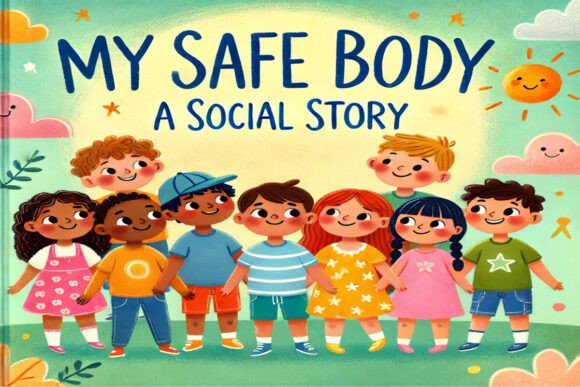
A social story is a short, descriptive story written from a first-person perspective that explains a social situation, skill, or concept. Developed by Carol Gray in the early 1990s, social stories are widely used in special education, therapy, and parenting to help individuals—especially those with autism, ADHD, or social communication delays—understand expectations and navigate social interactions. The Safe Body Social Story Hands to Self focuses specifically on keeping one’s hands and body to oneself, respecting others’ personal space, and understanding the reasons behind this rule.
Unlike a simple instruction, this story frames the behavior in a positive, non‑judgmental way. It explains why we keep our hands to ourselves (safety, respect, comfort) and how to do it in different situations—while waiting in line, sitting at a desk, playing with friends, or greeting others. The story typically includes simple sentences, supportive visuals, and a calm tone that reduces anxiety and confusion.
Core Features of an Effective Safe Body Social Story
- First‑person narrative – “I keep my hands by my side when I’m in line.” This helps the reader see themselves in the story.
- Descriptive and directive sentences – Describes what happens (“Sometimes I want to touch my friend’s hair”) and gives a positive alternative (“I can say ‘I like your hair’ instead”).
- Visual supports – Photographs, icons, or drawings that illustrate the concept, making it accessible for non‑readers or visual learners.
- Positive language – Focuses on what to do, not what not to do. For example, “I keep my hands to myself” rather than “Don’t touch.”
- Realistic scenarios – Addresses common challenges like crowding, rough play, or hugging without permission.
Who Can Benefit from a Safe Body Social Story Hands to Self?
While originally designed for children with autism spectrum disorder, this social story is valuable for a much wider audience. Any child or adult who struggles with bodily awareness, impulse control, or understanding personal boundaries can benefit. Specific groups include:
- Children with autism or sensory processing differences – They may not intuitively perceive personal space or social cues.
- Children with ADHD – Impulsivity can lead to unintentional touching or crowding.
- Early learners (ages 2–6) – All young children are learning about boundaries; the story provides a consistent framework.
- Individuals in therapy for behavior challenges – Occupational therapists, speech therapists, and counselors often use social stories as part of a larger intervention.
- Self‑advocates and adults – Yes, even adults can benefit. For example, someone in a supported living program might use a social story to learn appropriate workplace or community behavior.
Where Can This Social Story Be Used?
The Safe Body Social Story Hands to Self is versatile and can be implemented across multiple settings:
- At home – Parents can read the story daily, especially before high‑stress events like playdates or family gatherings.
- In the classroom – Teachers can incorporate it into morning routines, circle time, or as a pre‑teaching tool before transitions (e.g., moving to the carpet).
- During therapy sessions – ABA therapists, speech‑language pathologists, and occupational therapists use it to reinforce target behaviors.
- In community settings – The same story can be adapted for library trips, grocery shopping, or playground visits.
Strengths and Considerations
Like any tool, the Safe Body Social Story has clear strengths as well as limitations that users should understand.
Strengths
- Non‑punitive and empowering – It teaches through explanation rather than correction. The learner feels understood and capable.
- Predictable structure – The repetitive format reduces anxiety and builds confidence over time.
- Customizable – You can insert the child’s name, preferred visuals, and specific settings. For example, “When I am at Grandma’s house, I keep my hands to myself.”
- Supports generalization – When used across multiple environments, the concept becomes more embedded.
Limitations and Practical Expectations
- Not a quick fix – Social stories are most effective when paired with modeling, practice, and positive reinforcement. One reading rarely suffices.
- Individual variation – What works for one child may not work for another. The story must be tailored to the learner’s language level, interests, and challenges.
- Requires consistency – Adults need to read the story regularly and refer back to it during actual moments (e.g., “Remember your hands‑to‑self story?”).
- May need complementary strategies – For severe behavior challenges, a social story alone may be insufficient; it should be part of a broader behavioral support plan.
Real‑World Examples and Applications
To illustrate the power of this tool, consider these scenarios. In each, the Safe Body Social Story Hands to Self is used to frame the learning positively.
Example 1: The Over‑Enthusiastic Hugger
A four‑year‑old boy loves to hug his classmates, but many of them shy away or become upset. His mother creates a social story titled “How I Greet My Friends.” It reads: “When I see my friend, I can say hello. I can wave. I can ask, ‘Can I give you a hug?’ If they say yes, I give a soft hug. If they say no, I keep my hands by my side. That is okay. I am a good friend.” After reading this story daily for two weeks and practicing at home, the child begins asking permission before hugging. The story gave him a script he could follow.
Example 2: Lining Up Without Pushing
A kindergarten teacher notices that several children crowd together when lining up, often poking or grabbing the child in front. She introduces a class‑wide social story: “When We Line Up.” The story explains, “We stand with our hands at our sides. We look at the person’s back, not their hair or clothes. We wait for our turn. Our hands stay safe.” The teacher reads it before each transition. Within a week, the number of incidents drops significantly. The story’s visual cues (a picture of hands‑to‑sides) are posted near the door as a reminder.
How to Evaluate or Create a Safe Body Social Story Hands to Self
Whether you are choosing an existing story from a resource library or crafting your own, here are key considerations:
- Relevance – Does the story address the specific situations where the child struggles? If the problem occurs during play but not during meals, the story should focus on playground scenarios.
- Language level – Use simple, concrete words. Avoid metaphors or complex sentences. For young learners, one to three sentences per page is ideal.
- Positive framing – Replace “Don’t hit” with “I keep my hands gentle.” State the desired behavior clearly.
- Visual quality – If you are creating your own, use real photos of the child or their environment. This increases relatability. Alternatively, choose story templates with clear, age‑appropriate illustrations.
- Review and revise – After a few uses, ask: Is the child engaged? Is the behavior improving? Tweak the wording or change scenarios as needed.
For those who prefer a ready‑made version, many reputable sources offer free social story templates that can be personalized. Simply search for “safe body social story hands to self” and look for editions that include editable text fields and printable visuals.
Conclusion: A Gentle Path to Safer Boundaries
The Safe Body Social Story Hands to Self is more than a set of instructions—it is a bridge between confusion and understanding. By offering a narrative that respects the learner’s perspective, it transforms an abstract rule into a tangible, manageable goal. Whether you are a parent trying to ease your child’s social interactions, a teacher building a respectful classroom culture, or a therapist seeking evidence‑based tools, this social story provides a foundation of clarity and compassion.
Remember that lasting change takes time and repetition. Pair the story with consistent modeling, practice, and praise. And when challenges arise, revisit the story together—it isn’t a one‑time lesson but a resource that adapts along with the learner. With patience and the right story, hands can find their way to the side, and connections can grow without discomfort or conflict.